
You open the package, pull out the jersey, and something feels wrong. The fabric is thinner than expected. The crest looks slightly off. The numbers appear printed instead of stitched.
Knowing where to buy a jersey in Canada, and how to read what you’re buying, matters more than it used to. We gathered the key facts behind how the sports jersey market works, from authentic vs replica tiers to materials, sizing, and the small construction details that reveal quality before you buy.
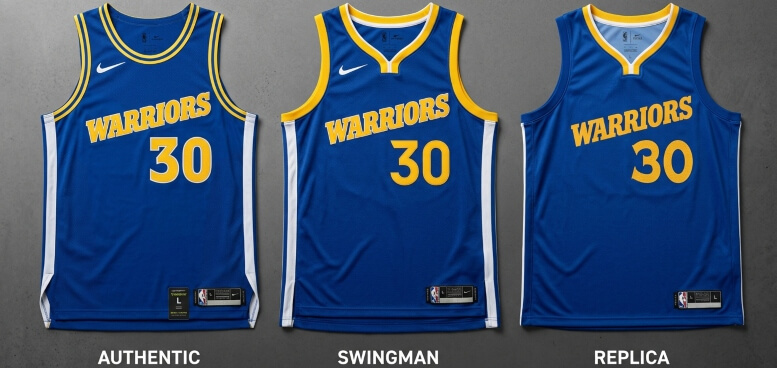
Authentic, Replica, Swingman: What Each Tier Means
The naming system across leagues is confusing by design, or at least confusing by accident. “Authentic” does not mean the same thing everywhere, and the word “replica” covers everything from a well-made mid-range jersey to a heat-pressed screen print that will crack after six washes.
The underlying structure, though, is the same across every major North American sport. Three functional tiers, sometimes four if you count the unlicensed budget market that exists outside official channels.
FACT CHECK
Starting with the 2024-25 season, Fanatics became the NHL’s official outfitter. The Authentic Pro jersey, the exact on-ice product, is now available to fans for the first time in ten years.
It is manufactured by SP Apparel in Quebec, the same facility that has produced NHL uniforms since the 1970s.
Here is how the tiers map across the four major leagues:
Tier | NHL Name | NBA / NFL Name | What You Get | Approx. Price (CAD) |
|---|---|---|---|---|
On-ice / On-field | Authentic Pro | Authentic / Elite | Exact player spec, stitched direct into mesh | $425–$500 |
Mid-range | Premium | Limited / Swingman | Lighter fabric, full embroidery, same visual | $200–$260 |
Fan / Entry | Breakaway | Game / Replica | Simplified construction, correct design | $160–$200 |
Budget | (unlicensed) | (unlicensed) | Screen-printed numbers, heat transfer logo | $30–$80 |
The confusion that catches people out most often: sellers describe screen-printed jerseys as “stitched” because the nameplate is technically applied using a stitched twill patch. Look at the numbers and the front crest instead. If those elements are not embroidered and raised from the surface, the jersey is not what the listing claims.
Comparing Sports Jersey Tiers in Real Use
The Authentic Pro at the top of the NHL range weighs approximately 140 g/m². The Breakaway at the fan tier runs closer to 90–100 g/m². That is a difference you feel immediately when you pick them up. The Authentic Pro is denser, heavier, structured. The Breakaway is soft and light, closer to a high-quality athletic shirt.
For most people buying a jersey to wear to games or at home, Premium or Breakaway covers every practical need. The Authentic Pro makes sense for collectors who want provenance, or for anyone who wants to add official sponsor patches and seasonal markings that require the authentic base construction.
“Fanatics did a great job designing these jerseys. They feel comfortable and look breathable, which is important during games”.
— Auston Matthews, Toronto Maple Leafs, on the 2024-25 Fanatics Authentic Pro uniform
Simple Checks to Identify Fake Jerseys
Counterfeit jersey quality has improved sharply over the past decade. Surface embroidery, accurate team colours, and correct logo placement used to be reliable tells. Now, good-looking fakes exist across every sport. The checks that still work consistently are construction details, the parts that cost money to replicate correctly and that most counterfeit producers don’t bother with.
Experienced collectors go inside the jersey first.
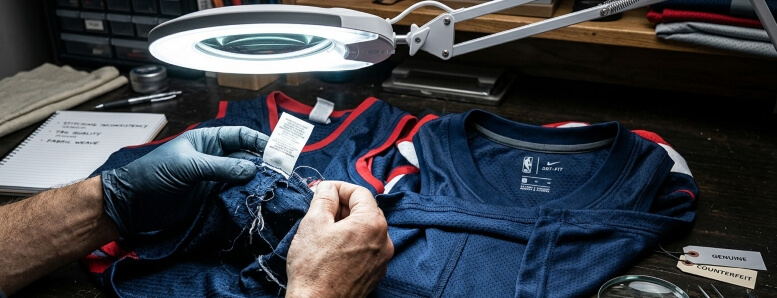
The fight strap test
On a legitimate NHL Fanatics or Adidas jersey, the fight strap, the loop of fabric at the back hem designed to be tucked into hockey pants, is made from thick, non-elastic material. It lies completely flat when stitched down and does not stretch when pulled. It carries two male snaps and one female snap at the end, plus a substantial Velcro patch with no loose edges.
WHAT TO DOUBLE-CHECK
On most counterfeits, the fight strap is shorter, thinner, and elastic. Pull it and it stretches noticeably.
The original does not. This single check is consistently reliable enough that experienced collectors on hockey forums reference it as their first stop, before looking at anything else.
Inside stitching
On a legitimate NHL jersey, the front crest is stitched directly into the mesh structure of the jersey using thousands of individual stitches. There is no backing fabric. Flip the jersey inside out and look at the back of the crest. A white or beige backing panel means the crest was applied as a separate piece. Standard on fakes, absent on authentic jerseys.
Hologram, embroidery, and the tag
Every licensed NHL jersey sold at retail includes a hang tag carrying a hologram. Tilt it under light and it shifts between “NHL” and “LNH.” Reproducing this effect requires optics that most counterfeit operations skip entirely. When a hologram does appear on a fake, it is typically a flat static print that does not change.
“Advanced athletic performance.”
— Text found on an interior tag of a counterfeit NHL jersey, from a 2015 CBC investigation into Halifax retailers
Interior tags carry another quick check. The spelling error above appeared on a verified counterfeit. Licensed manufacturers catch errors at quality control. Most counterfeit facilities do not.
TIP
For NFL Nike jerseys, look at the Nike wordmark stitched into the back neckline. On a legitimate jersey, there are no loose threads between the letters.
Nameplate letter height is also a reliable check: licensed NHL retailers use 3″ nameplate letters. Most counterfeits come in at 2.5″ – visible side by side, but requires knowing the correct spec.
NBA, NHL, MLB, NFL: Sizing Differences by Sport
There is no consistent sizing standard across North American sports leagues. The word “Large” on an NHL jersey means something entirely different from “Large” on an NBA jersey, and both differ from an NFL jersey depending on whether it was made by Reebok or Nike.
In practical terms, it looks like this:
Sport | Fits vs Streetwear | Reason | Practical Tip |
|---|---|---|---|
NHL / Hockey | Runs 1–2 sizes large | Worn over padding | Size down one from your usual |
NBA / Basketball | True to size, short hem | Player silhouette cut | Size up if you want a looser fit |
MLB / Baseball | Slightly loose and boxy | Traditional baseball cut | Check chest measurement, not label |
NFL (Nike, 2012–now) | Slim through torso | Vapor Fuse template | True to size or slightly up |
NFL (Reebok, pre-2012) | Generous / boxy | Legacy cut pattern | Size down vs current Nike |
Soccer / Club kits | Player cut: slim; Fan cut: relaxed | Two separate patterns | Confirm which cut before ordering |
The era problem in the NFL
This one catches people buying vintage more than anything else. Reebok-era NFL jerseys from 2002 through the end of their contract in 2012 were cut with a generous, boxy fit through the torso and shoulders. The current Nike Vapor Fuse template is noticeably slimmer. Buying a vintage Reebok jersey in your Nike size often means getting something too large.
What Jerseys Are Made Of
Modern jerseys across every major North American sport are built from polyester. The differences that matter, and that determine how a jersey behaves over years of use, are in the weave structure, weight, and how the numbers and lettering are applied.
Tier | Fabric | Numbers / Lettering | Durability |
|---|---|---|---|
Authentic / Authentic Pro | Heavy knit mesh polyester (~140 g/m²) | Tackle-twill stitched into mesh | High – built for game use |
Premium / Swingman | Mid-weight polyester (~110 g/m²) | Embroidered twill on fabric | Good – handles regular washing |
Fan / Breakaway / Game | Light polyester (~90 g/m²) | Layered twill, simpler stitching | Moderate – avoid dryer heat |
Screen-print / Budget | Flat single-ply polyester | Heat-transfer vinyl | Low – cracks with heat over time |
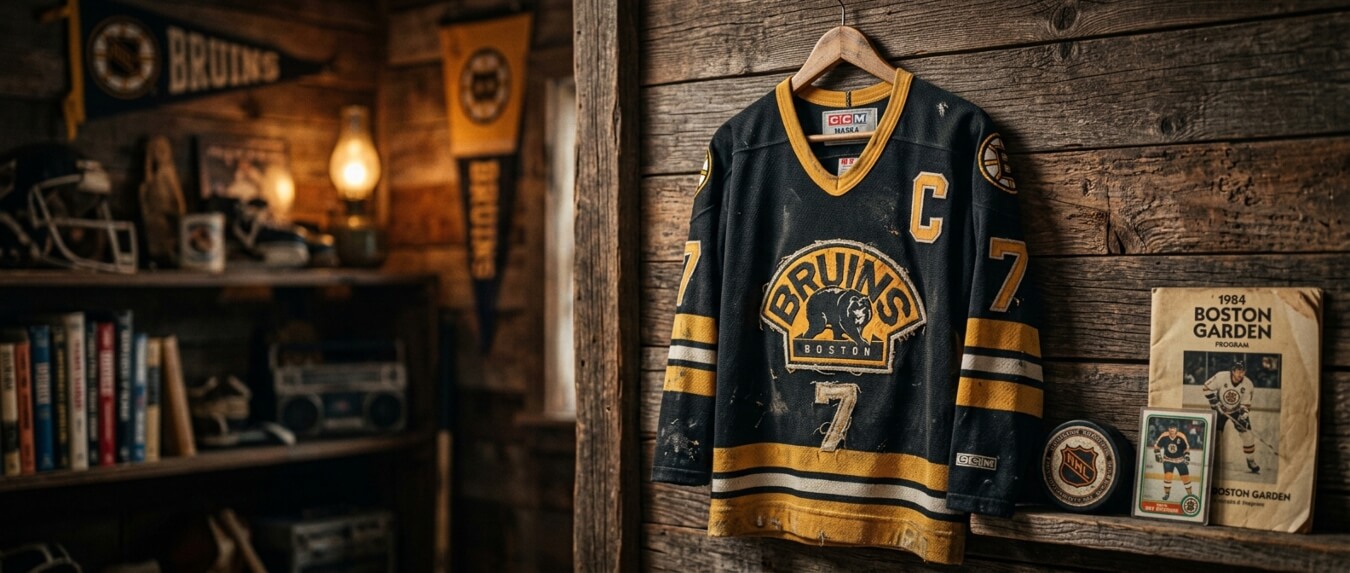
Vintage jerseys
Jerseys from the 1980s and earlier, particularly in hockey, used heavier synthetic blends and, in some cases, wool and cotton mixes. CCM and Tackla sweaters from the NHL during that era have a weight and texture that modern polyester doesn’t replicate. Part of what gives them collector value, beyond the player or team association, is the material itself.
KEY FACT
Heat is the main enemy of any jersey, regardless of tier.
Hot-water washing and machine drying degrade both the polyester fabric structure and embroidery thread. On screen-printed jerseys, repeated heat cycles cause cracking numbers and peeling letters, and that damage is permanent.
Cold wash, gentle cycle, air dry: that applies to every tier.
When a Jersey Number Becomes Important
In most sports, the number on a jersey is an assignment, not a permanent identity. Players change teams, change numbers, and retire. For collectors, this creates a meaningful distinction between jerseys tied to a specific historical moment and jerseys that are incidentally associated with a player during one chapter of their career.
League | Scope of Retirements | Notable Examples | Effect on Collectors |
|---|---|---|---|
NHL | Per franchise + #99 league-wide | #99 Gretzky (all teams), #33 Patrick Roy (Avalanche, Canadiens) | Retired numbers command a lasting premium regardless of era |
NBA | Per franchise only | #23 Jordan (Bulls), #6 Russell (Celtics) | Player-team combinations are the collector unit, not just the number |
NFL | Per franchise only | #12 Brady (Patriots), #88 Irvin (Cowboys) | Era matters: pre- vs post-2021 number rule change affects position context |
MLB | Per franchise + #42 league-wide | #42 Jackie Robinson (all teams) | #42 on any team carries the same historical weight |
MLS / Club Soccer | Rare; squad numbers reassigned yearly | Varies by club | Player-specific jerseys are season-specific; check squad number history |
The season question in soccer
Club soccer numbering is the most fluid. Squad numbers are assigned for a single season and can change entirely at the next. A player wearing number 10 this year may not wear it next year, especially after a transfer. This makes player-specific club jerseys time-stamped artifacts rather than lasting records of a career. Before buying a player-specific club kit, confirm the exact season the number was worn, that is the historical unit that matters.
The 2021 NFL number rule change
In 2021, the NFL relaxed its position-based numbering rules to allow more flexibility within each group. The legacy numbering conventions still shape how collectors read era-specific jerseys. A 1990s NFL jersey with an “unusual” number for its position is either a specific historical quirk worth knowing about or a sign the jersey is misrepresented. Knowing the rule context is part of reading the jersey correctly.
Buying Sports Jerseys: FAQs
Authentic and Premium-tier jerseys tolerate a cold, gentle machine wash followed by air drying. High heat, from a hot wash or a dryer, degrades both the fabric structure and the embroidery thread over time. On screen-printed jerseys, heat cycling is specifically what causes numbers to crack and letters to peel. The care label instructions exist for a reason.
Only when the provenance is verifiable. A legitimate game-worn jersey comes with documentation from the issuing team or from a third-party authentication service such as PSA or JSA. Without that paperwork, the claim cannot be confirmed, and the price premium is not supportable. Photo-matched jerseys, confirmed against contemporaneous game photography, represent the highest level of provenance and are priced accordingly.
Adidas held the NHL uniform contract from 2017 until the start of the 2024-25 season. Their retail Adizero jersey remains available on the secondary market and occasionally through licensed retailers clearing old stock. It is a quality jersey, lighter than the current Fanatics Authentic Pro but well-constructed. For collectors buying a jersey specifically from the 2017-2024 era, the Adizero is the correct product.
Not by itself. Cutting the tag is common practice at secondhand sellers, sometimes to remove the original price. In isolation, it removes one authentication layer but proves nothing. Combined with other signs, elastic fight strap, beige crest backing, undersized nameplate numbers, it becomes part of a pattern worth walking away from.
NHL Authentic Pro jerseys are currently made by SP Apparel in Quebec. Nike’s NBA and NFL products are manufactured in licensed factories, primarily in Asia, under contracted quality controls. The manufacturing location alone does not indicate authenticity, counterfeits are also made in Asia. What matters is the licensing chain, not the geography.
For licensed NHL, NBA, MLB, and NFL jerseys, the main channels are league-authorised retail sites and each team’s official online shop. For basketball jerseys, Canada-based authorised retailers stock the full Nike range including Swingman and Authentic editions. Secondary markets like StockX and eBay cover vintage and out-of-production jerseys, but require the same authentication checks as any other resale purchase.
This site publishes educational content about sports jerseys. We do not sell jerseys, process orders, or represent any retailer, league, or manufacturer.